If you are dreaming about a backyard dock and quick access to the water, Merritt Island can feel like the perfect place to buy. But not all waterfront homes here work the same way, and that can affect everything from boating to maintenance to insurance. This guide breaks down the basics so you can ask smarter questions, avoid surprises, and feel more confident as you shop. Let’s dive in.
Know what “waterfront” means
In Merritt Island, waterfront can describe several very different property types. The area is tied closely to the Indian River Lagoon system, including the Banana River and Indian River Lagoon, and some homes sit on canals or other water-access lots instead of direct open-water frontage.
That matters because your ownership experience can change a lot depending on the water type. A direct lagoon-front home, a canal-front property, and a home with indirect or shared access may all be marketed as waterfront, but they do not offer the same use, views, or boating setup.
Common waterfront categories
- Direct lagoon frontage on the Banana River or Indian River Lagoon
- Canal-front property on a manmade waterway
- Water-access or shared-access homes with a route to the water that may be indirect or limited
Before you fall in love with a listing, ask a simple question: What body of water is this home actually on? That one detail can shape your next steps.
Check boat access carefully
A dock in the backyard does not always mean you can use the water the way you expect. In and around Merritt Island, some waters have boating restrictions, and parts of the Banana River include manatee sanctuary areas where only non-motorized boats are allowed.
Other refuge waters may have slow-speed or other use limits. So if boating is part of your lifestyle, it is worth confirming not just that the home has water access, but whether your intended boat use matches the actual route and rules.
Questions to ask about access
- Can a boat get from the backyard to the open water you want to use?
- Are there speed or motor restrictions on the route?
- Is the water shallow in places that could affect navigation?
- Does the lot support the kind of boat you own or plan to buy?
This is especially important for remote and relocation buyers. Photos can make access look simple, but the real story is in the water conditions, restrictions, and route.
Inspect the waterfront features
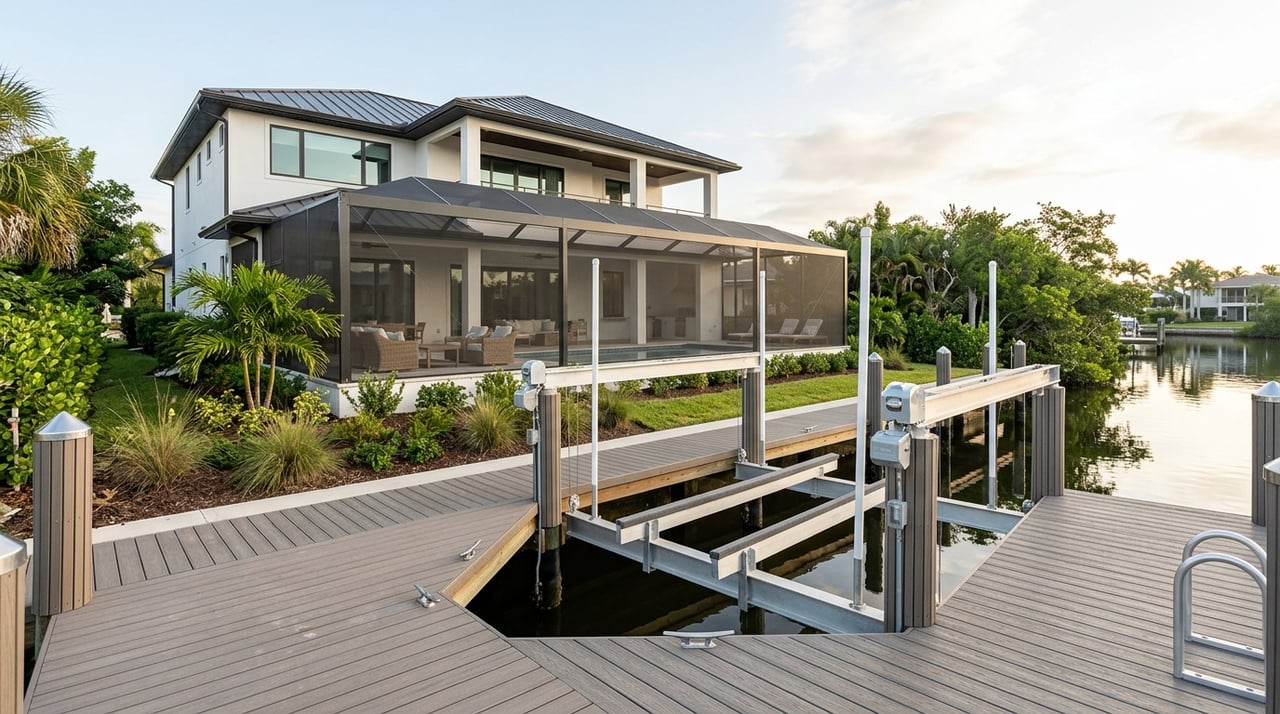
When you buy a Merritt Island waterfront home, you are not just buying the house. You are also buying the shoreline setup, marine improvements, and the upkeep that comes with them.
Brevard County’s marine construction guidance shows why this matters. Permits for docks, seawalls, and boat lifts in manmade bodies of water often require details like existing structures, dimensions, waterway width, and projected property lines into the water.
That makes your due diligence package especially important. A recent survey, permit history, and any maintenance records can help you understand what is there, whether it was properly documented, and what condition it is in now.
Features worth reviewing
- Dock condition
- Boat lift operation and condition
- Seawall condition, if present
- Shoreline type
- Waterway width and usable depth
- Survey showing waterfront improvements
- Permit history for marine structures
A waterfront showing should go beyond admiring the view. You want to understand whether the existing setup fits your plans and whether any major work may be ahead.
Understand shoreline type
Merritt Island waterfront lots do not all have the same shoreline design. Some homes have hardened structures like seawalls, while others may have a more natural or living shoreline approach.
This is more than a visual detail. Florida Sea Grant notes that living shorelines may involve ongoing upkeep like debris removal, replanting vegetation, adding sand fill, and checking that structural elements stay in place. It also notes that hardened shoreline structures such as seawalls can increase erosion on adjacent property and reduce habitat.
Why shoreline type matters
- Maintenance needs can differ over time
- Repair costs can vary by shoreline setup
- Navigation and use may be affected by shallow areas or nearby habitat
- Future planning may depend on the condition of the existing shoreline
If the property borders shallow water, protected seagrass may also be part of the conversation. Florida DEP notes that seagrass is protected within aquatic preserves, and shallow-water navigation requires care.
Budget for waterfront maintenance
Waterfront homes often need a different maintenance mindset than inland homes. The combination of moisture, oxygen, and salt can speed up corrosion, especially on exposed metal hardware and marine-adjacent components.
UF/IFAS explains that salty moisture can cause pitting and that mixing dissimilar metals can make deterioration happen faster. It also recommends keeping metals dry and rinsing them well after salt exposure.
For you as a buyer, that means it is smart to look beyond today’s appearance. A dock may look fine at first glance, but fasteners, hardware, coatings, and lift components may require regular attention.
Maintenance topics to discuss
- Which dock or lift components are most exposed to salt?
- What upkeep has been done recently?
- Are there signs of corrosion on hardware or metal parts?
- What kind of shoreline maintenance should you expect?
Owning on the water can be incredibly rewarding, but it helps to go in with a realistic plan for routine care.
Talk insurance early
Insurance should be part of your waterfront home search from the beginning, not something you leave until the final stretch. In Florida, a waterfront property can bring added questions about flood risk, hurricane deductibles, wind-mitigation features, and how certain improvements are handled under a policy.
Brevard County’s floodplain office is the official repository for FEMA flood maps in the county and can provide flood-zone and elevation-certificate information. That gives you a local starting point for understanding how the property is classified.
FEMA states that flood insurance is separate from most homeowners insurance policies, and most homeowners insurance does not cover flood damage. FEMA also states that homes in high-risk flood areas with government-backed mortgages require flood insurance, and NFIP policies typically have a 30-day waiting period before taking effect.
Florida guidance adds more to the picture. The Florida Chief Financial Officer says homeowners policies may include a separate hurricane deductible, and the Florida Office of Insurance Regulation says insurers must offer premium discounts for approved wind-loss mitigation features documented on the Uniform Mitigation Verification Inspection Form.
Insurance questions to ask before you offer
- Is the home in a Special Flood Hazard Area?
- Will your lender require flood insurance?
- What hurricane deductible would apply?
- Are wind-mitigation credits available?
- How would the policy treat docks, lifts, or seawalls?
These conversations are especially helpful before you commit. They can affect both your monthly costs and your comfort level with the purchase.
Build your due diligence around the water
A good waterfront home search is really a layered process. You are evaluating the home itself, but also the water type, access rules, shoreline condition, marine improvements, and insurance profile.
That is why it helps to stay organized and ask the same core questions on every property. When you compare homes this way, you get a clearer sense of which one truly fits your goals.
A simple waterfront buyer checklist
- Identify the exact water type
- Confirm how usable the water access really is
- Review survey and permit history
- Inspect dock, lift, seawall, or shoreline condition
- Ask about maintenance and corrosion exposure
- Verify flood-zone details early
- Discuss hurricane deductibles and wind-mitigation credits
This approach can help you avoid treating all waterfront homes as the same product. On Merritt Island, small differences can have a big impact on how a property lives day to day.
If you are planning a Merritt Island waterfront purchase, having local guidance can make the process feel much more manageable. The right support can help you sort through access questions, compare property types, and move forward with more clarity. When you are ready to explore your options, connect with the Beach Life 321 Team.
FAQs
What does waterfront mean in Merritt Island?
- In Merritt Island, waterfront may mean direct frontage on the Banana River or Indian River Lagoon, canal frontage on a manmade waterway, or a home with indirect or shared water access.
What should you check before buying a Merritt Island dock home?
- You should review the dock, lift, seawall or shoreline condition, recent survey, permit history, waterway width, and whether the water depth and route fit your intended use.
Can every Merritt Island waterfront home be used for boating?
- No. Some waters have restrictions, and parts of the Banana River include manatee sanctuary areas where only non-motorized boats are allowed.
Why does shoreline type matter for a Merritt Island waterfront property?
- Shoreline type affects maintenance, repair needs, and long-term use, whether the property has a seawall, living shoreline, or another type of stabilization.
Do Merritt Island waterfront buyers need flood insurance?
- It depends on the property’s flood-zone classification and loan type, but flood insurance is separate from homeowners insurance and may be required for some homes in high-risk flood areas.
What insurance topics matter most when buying waterfront in Merritt Island?
- Key topics include flood-zone status, lender flood-insurance requirements, hurricane deductibles, wind-mitigation credits, and how a policy handles waterfront improvements like docks, lifts, or seawalls.