If you've lived on Merritt Island long enough, you've stopped running outside for every launch. You know the schedule shifts by hours, that some liftoffs happen before your coffee's ready, and that the streak of light off the pad is often over before you've found a good spot on the lawn. What still gets people, even longtime residents, is the boom that shows up minutes later, from a completely different direction, for a completely different reason.
That boom isn't the launch. It's the landing. And whether you hear it, and how hard it hits your windows, has less to do with the rocket than with the weather sitting over the island that night.
Two separate events, not one loud moment
A Falcon 9 launch produces two distinct physical events on most missions. The first is the liftoff itself: the rocket climbs off the pad, and if you're watching from your yard or a nearby park, that's the part you actually see. The second happens a few minutes later, when the booster's first stage comes back down and lands, either on a droneship out in the Atlantic or back on solid ground at Cape Canaveral Space Force Station. That return trip means the booster is moving faster than the speed of sound as it descends, and that's what produces the sonic boom, a compressed band of air that travels outward from the booster as it slows.
This is why the loudest part of a launch night can happen well after the light in the sky has already faded. According to ClickOrlando, on July 30, 2026, a Falcon 9 lifted off just after 3 a.m. carrying a classified payload for the National Reconnaissance Office. Minutes after liftoff, the booster returned and landed back at Cape Canaveral Space Force Station, and that landing is what triggered the sonic boom that woke people up as far away as Orange and Seminole counties. If it reached Orlando, Merritt Island residents sitting a fraction of that distance from the Cape felt it first and hardest. It was the seventh flight for that particular booster, which had already flown missions including KF-01, IMAP, NROL-77, GPS III-9, and CRS-34.
Here's how the two moments actually compare on a typical night:
Liftoff | Booster Landing (the boom) | |
|---|---|---|
What you notice | A bright climbing light, sometimes with a visible plume | A sudden low boom, often felt before it's heard |
Timing | Immediate, at the published launch time | A few minutes after liftoff, unpredictable to the second |
Direction | East, toward the pad | Can arrive from the Cape or from over the water, depending on landing site |
Weather sensitivity | Mostly affects visibility (cloud cover) | Affects how far and loud it travels |
Why August nights carry the boom farther than January ones
The distance a sonic boom travels, and how sharp it feels when it arrives, depends on temperature, humidity, and wind. As one Central Florida news outlet put it after the July 30 boom, those conditions mean residents are more likely to hear the booms during Florida's warm, muggy summers than during cooler, drier winter months. That's not a minor detail if you live here in August. The same booster landing that might produce a muffled thump in February can rattle a sliding door in the middle of a humid summer night.
This is worth knowing not because it changes anything about your evening, but because it explains something that otherwise feels random. If your neighbor three streets over swears the boom was worse at their place, or if the same rocket felt louder this month than it did last winter, the difference isn't in your imagination. It's in the air.
Recent launch activity this month
SpaceX has kept up a steady cadence out of Cape Canaveral this month. On August 5, 2026, a Falcon 9 launched three AST SpaceMobile BlueBird satellites, targeting a pre-dawn liftoff. A Starlink mission was slated for August 10, the very next launch window on the board. Those dates offered residents on the island two opportunities within ten days to catch a light in the sky and, depending on where each booster came down, a boom to go with it.
Launch schedules move around with weather and technical readiness more often than not, so treat any specific date as a plan rather than a promise. But the pattern holds: most months bring more than one opportunity, which is part of why locals have stopped treating any single launch as a special occasion and started treating the whole thing as weather.
Where people actually go to watch
Nobody on Merritt Island needs to drive to Titusville for this. Two public parks on the island itself are regularly used by residents for launch viewing, and both do double duty as everyday recreation spots the rest of the time.
- Rotary Park, at 1899 S. Courtenay Parkway, is a straightforward open-view spot that shows up on local lists of places to watch a launch without the crowds you'd find at the visitor centers.
- Kiwanis Island Park, on Kiwanis Island Park Road, is an 18.5-acre river park with a boat ramp, fishing dock, exercise trail, ball fields, and tennis courts, all sitting on Sykes Creek where it opens into the Barge Canal. It's the kind of place where you might be halfway through a walk on the exercise trail when a launch window opens, which is a very different experience than driving somewhere specifically to see one.
Both are public land, both are free, and both are used far more often by people walking dogs or launching kayaks than by anyone treating a launch as the main event.
After the boom, dinner on the water
If the launch was early evening and you're not ready to head home, Merritt Island has a few spots built for exactly that stretch of time between the sky going dark and dinner.
Dolphins Waterfront Bar & Grill at Cape Crossing sits at 310 Lagoon Way on the historic Canaveral Barge Canal, the channel connecting the Indian and Banana Rivers. It opened in March 2022 as the largest tiki bar on Florida's Space Coast, an open-air space seating 200 under a thatched roof that rises 65 feet, with a 40-foot floating dock for anyone arriving by boat. The menu leans Polynesian with a Florida twist, and it's close enough to the water that a booster landing across the way can register as a genuine jolt at the bar rather than a distant rumble.
For a quieter option, Marker 24 Riverfront Grille, at Marker 24 Marina, keeps Wednesday through Sunday hours and offers the kind of unhurried riverfront seating that works well after a launch has cleared out the initial rush of onlookers.
The version of this that matters if you're already here
Guides written for visitors tell you where to stand. What actually matters if you live here is knowing that the loud part isn't the part you're watching, that summer air carries it farther than winter air does, and that the parks and restaurants already built into your routine are the same ones locals have been using for this for years. None of it requires planning a trip. It's just Tuesday, with better lighting.
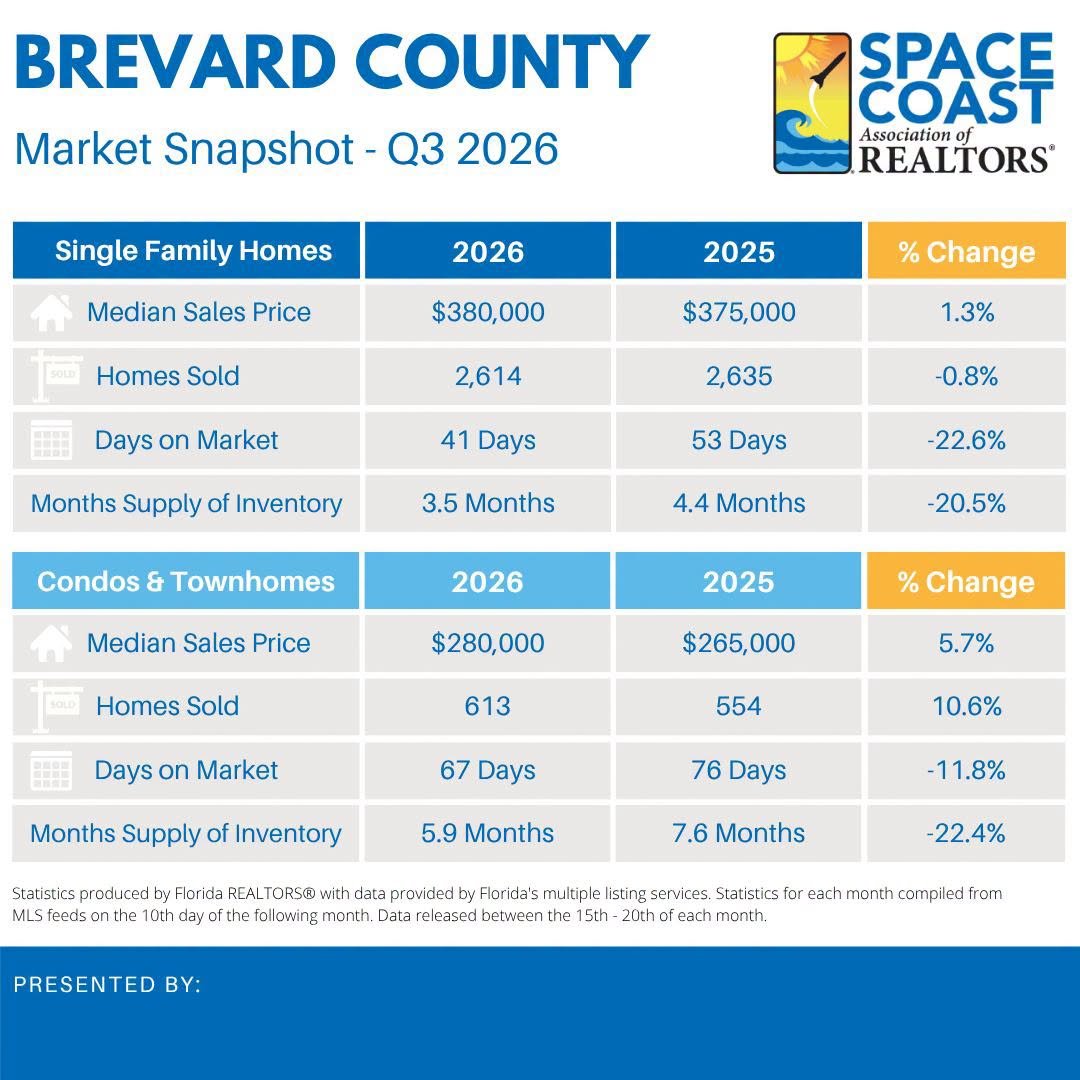
If you're weighing what a home on Merritt Island is worth in today's market, whether it's one you've lived in through a hundred of these nights or one you're just getting to know, the Beach Life 321 Team is happy to talk it through. Get a Free Home Valuation whenever you're ready.